Beef Wellington Recipe
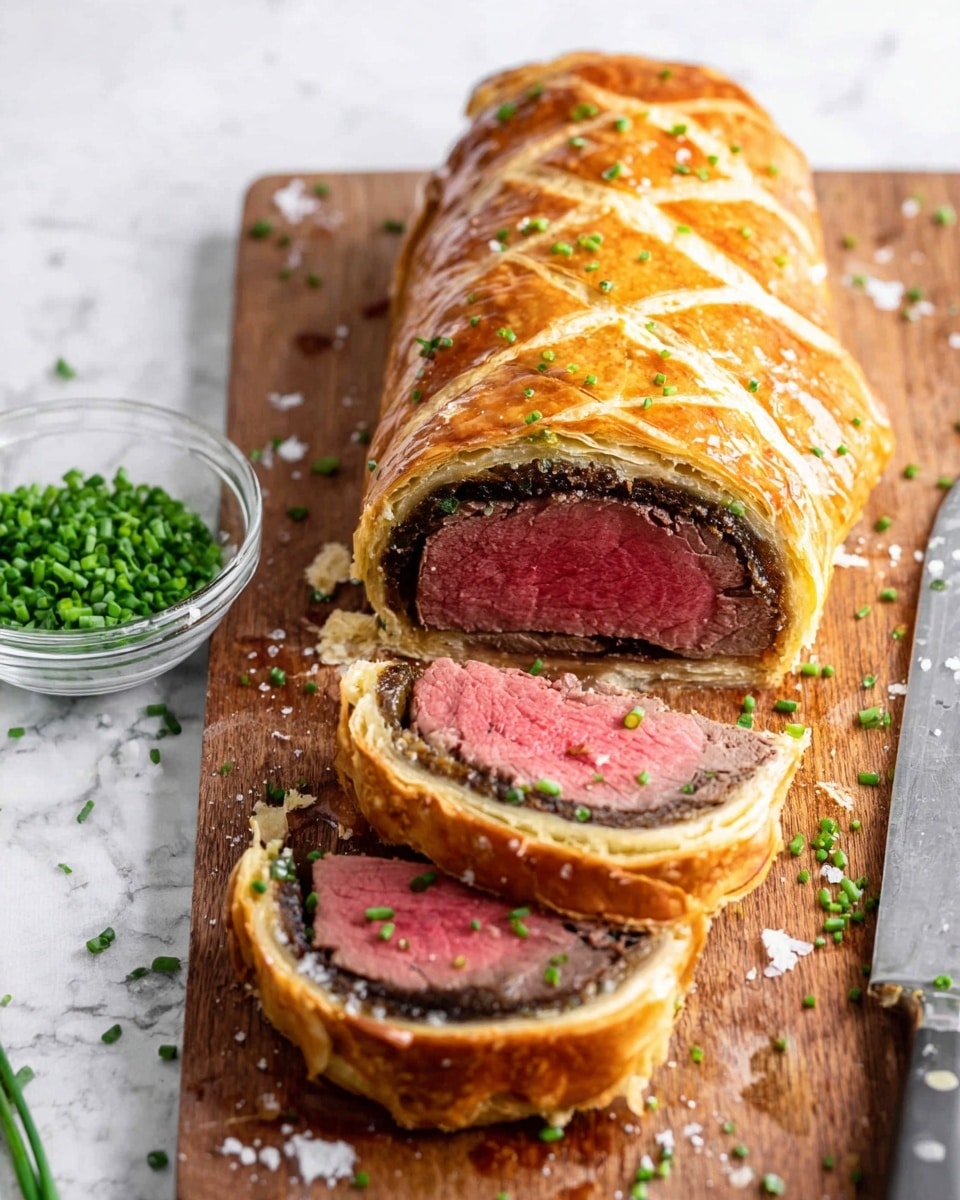
If there is one show-stopping dinner that never fails to impress guests or feel extra special for a family celebration, it has to be the Beef Wellington Recipe. This classic dish wraps a succulent, seared beef tenderloin with a flavorful mushroom duxelles and salty prosciutto, all encased in buttery, flaky puff pastry. The combination of textures and layers of taste bring together a beautiful centerpiece that is as elegant as it is comforting. I can’t wait to share this step-by-step journey with you, so you can master the art of Beef Wellington and wow your loved ones with something truly unforgettable.
Ingredients You’ll Need
Gathering fresh, simple ingredients is the key to building all the layers of flavor and texture in this Beef Wellington Recipe. Each component, from tenderloin to mushrooms to puff pastry, plays a vital role in creating that perfect balance between earthiness, richness, and crispness.
- 2-3 pounds center-cut beef tenderloin: The star of the dish, tender and juicy with a mild flavor that pairs beautifully with the other ingredients.
- Kosher salt and freshly ground black pepper: Essential for seasoning to bring out the natural taste of the beef and mushrooms.
- 2 Tablespoons olive oil: Used for searing the beef and sautéing the mushroom mixture to develop depth of flavor.
- 2 Tablespoons dijon mustard: Adds a subtle tang and helps the prosciutto and mushroom layers stick to the tenderloin.
- 1 1/2 pounds mushrooms (button, cremini, shiitake, portabello, or a mix): Providing earthiness and moisture when cooked down into a duxelles.
- 2 Tablespoons salted butter: For richness when cooking the mushrooms.
- 2 medium shallots (roughly chopped): These add mild sweetness and complexity to the duxelles.
- 2 teaspoons fresh thyme leaves (about 6 sprigs): A fragrant herb that enhances the mushroom and beef flavors.
- 4 cloves garlic: For aromatic depth in the mushroom mixture.
- 12 thin slices prosciutto (about 1/4 pound): Wrapping the tenderloin to add saltiness and to keep the beef moist.
- Flour for rolling out puff pastry: Helps prevent sticking without drying out the dough.
- 14 ounces frozen or homemade puff pastry (thawed): The buttery, flaky crust that encases the entire creation, adding crunch and elegance.
- 1 large egg (beaten): For sealing the pastry and brushing the crust to a golden finish.
- 1/2 teaspoon flaky or coarse sea salt (such as Maldon or fleur de sel): Adds a final pop of texture and flavor on top of the pastry.
- 1 bunch finely minced chives: Fresh, bright herb to garnish and contrast the richness of the wellington.
How to Make Beef Wellington Recipe
Step 1: Prepare and Sear the Tenderloin
Start by trimming any silver skin and fat from your beef tenderloin, then tie it at 1-inch intervals to keep a uniform shape while cooking. Generously season your beef with kosher salt and freshly ground pepper—this is your foundation for flavor. Heat olive oil in a large skillet until it’s almost smoking, then sear the beef on all sides without moving it too much; it’s all about achieving that perfect, brown crust that seals in the juices. After searing, brush the warm tenderloin all over with dijon mustard to introduce a subtle tang and help the mushroom layer stick later on.
Step 2: Make the Mushroom Duxelles
Chop your mushrooms with shallots, garlic, and thyme in a food processor until finely minced. Cook this mixture in butter and olive oil over medium-high heat until the mushrooms release their moisture and it evaporates, leaving a fragrant, richly concentrated duxelles. This intense mushroom filling adds moisture and earthiness, balancing the beef’s richness perfectly.
Step 3: Assemble the Prosciutto and Mushroom Layer
Lay out the prosciutto slices on plastic wrap, overlapping slightly to form a large square. Spread your mushroom duxelles evenly over the prosciutto, then place the tenderloin at one edge. Using the plastic wrap, roll the prosciutto and mushroom mixture tightly around the beef, tucking in the ends as you go. This keeps everything together and infuses the beef with that wonderful salty flavor. Chill this wrapped log in the fridge for about 30 minutes to firm everything up for the pastry wrap.
Step 4: Wrap in Puff Pastry and Bake
Preheat your oven to 425°F (218°C). On a floured surface, roll out your thawed puff pastry into a size that fully envelops the beef roll. Remove the tenderloin from the plastic wrap and place it in the center of the pastry. Wrap it up tightly, sealing the edges with beaten egg. Trim any excess pastry for a neat finish, then transfer to a parchment-lined baking sheet. Brush the top with more beaten egg, add diagonal slashes across the pastry for steam to escape, and sprinkle with flaky sea salt for texture and that finishing touch. Bake for 40-45 minutes, or until the pastry is golden brown and a thermometer reads 120-125°F for medium-rare. Let it rest before slicing to preserve the juices.
How to Serve Beef Wellington Recipe
Garnishes
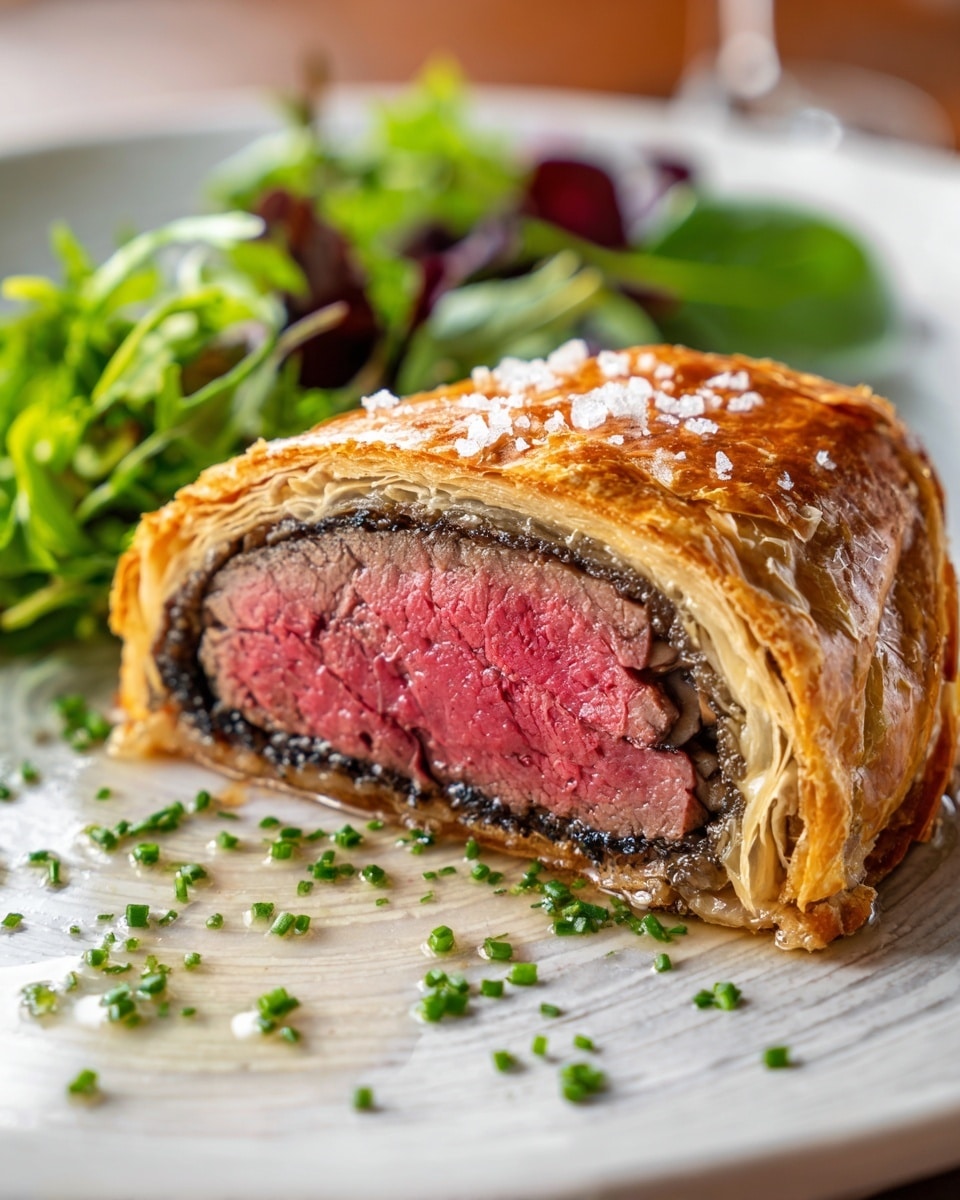
Finishing your Beef Wellington Recipe with finely minced fresh chives sprinkled over the top not only adds a lovely burst of color but also a light oniony brightness that cuts through the richness of the dish. An extra pinch of flaky sea salt on the crust brings out the buttery flavors and gives a satisfying crunch with each bite.
Side Dishes
Classic sides that complement Beef Wellington beautifully include creamy mashed potatoes or a silky parsnip purée to add buttery softness. Roasted seasonal vegetables such as carrots or asparagus provide texture and a hint of sweetness, while a simple green salad dressed with a light vinaigrette can add freshness and balance the meal.
Creative Ways to Present
Try serving individual Beef Wellington portions by slicing thicker medallions and plating them with a drizzle of red wine reduction or a rich mushroom jus. For a festive touch, you can use cookie cutters to create decorative shapes from the excess puff pastry and bake them alongside the wellington as edible garnishes or appetizers.
Make Ahead and Storage
Storing Leftovers
Once cooled, wrap any leftover Beef Wellington tightly with plastic wrap and refrigerate within two hours of cooking. It will keep well in the fridge for up to three days and make for delicious cold slices or quick reheating.
Freezing
You can freeze the fully assembled, uncooked Beef Wellington before baking. Wrap it well in plastic and foil to prevent freezer burn, then thaw overnight in the refrigerator before baking as directed. Freezing after baking is possible but can affect pastry flakiness, so reheating fresh is preferable.
Reheating
Reheat leftovers gently in a 300°F oven wrapped loosely with foil to prevent drying out, allowing the beef to warm through without overcooking and keeping the pastry crisp. Avoid microwaving as it tends to make the pastry soggy and beef tough.
FAQs
Can I use a different cut of beef for this Beef Wellington Recipe?
The center-cut beef tenderloin is best because of its tenderness and uniform shape, but if unavailable, a trimmed filet mignon roast can work. Avoid tougher cuts, as they won’t cook evenly or be as tender.
Why is it important to sear the beef before wrapping?
Searing seals the outside of the beef, locking in juices and creating a flavorful crust that enhances the final dish. It also adds depth of flavor and prevents the beef from steaming inside the pastry.
Can I prepare parts of this Beef Wellington Recipe in advance?
Absolutely! The mushroom duxelles and prosciutto wrap can be made a day ahead, stored separately, and assembled right before baking. You can also have the beef prepped and seared in advance for an easier final assembly.
What temperature should I cook the Beef Wellington to?
Aim for an internal temperature of 120-125°F for medium-rare. Remember that the beef will continue to cook slightly while resting, so pulling it out at this temperature ensures perfect doneness.
How do I prevent the puff pastry from getting soggy?
Rolling the beef tightly in prosciutto and coating with dijon mustard helps create a moisture barrier. Also, make sure to cook the mushroom duxelles until well-dried before assembling, and use a hot oven to promote a crisp, golden crust.
Final Thoughts
This Beef Wellington Recipe is a true celebration of classic cooking, combining luxurious ingredients and techniques that result in a dish worth every moment of effort. Whether for a special holiday or an unforgettable dinner party, giving it a try will bring incredible satisfaction and applause around the table. So grab your apron, gather your ingredients, and treat yourself and your loved ones to this timeless culinary masterpiece.
PrintBeef Wellington Recipe

This classic Beef Wellington recipe features a tender center-cut beef tenderloin coated with a flavorful mushroom duxelles and prosciutto, all wrapped in buttery puff pastry. The beef is seared to lock in juices, then baked to a perfect medium-rare for a stunning, elegant main course perfect for special occasions.
- Prep Time: 45 minutes
- Cook Time: 1 hour 15 minutes
- Total Time: 2 hours
- Yield: 8 servings 1x
- Category: Main Course
- Method: Baking
- Cuisine: British
Ingredients
Beef and Seasoning
- 2–3 pounds center-cut beef tenderloin
- Kosher salt and freshly ground black pepper (about 1 teaspoon kosher salt per pound of meat)
- 2 Tablespoons olive oil
- 2 Tablespoons Dijon mustard
Mushroom Duxelles
- 1 1/2 pounds mushrooms (button, cremini, shiitake, portobello, or a mix, cleaned and roughly chopped)
- 2 Tablespoons salted butter
- 2 Tablespoons olive oil
- 2 medium shallots (roughly chopped)
- 2 teaspoons fresh thyme leaves (about 6 sprigs)
- 4 cloves garlic
- Kosher salt and freshly ground black pepper to taste
Assembly and Baking
- 12 thin slices prosciutto (about 1/4 pound)
- Flour for rolling out puff pastry
- 14 ounces frozen or homemade puff pastry (thawed)
- 1 large egg (beaten)
- 1/2 teaspoon flaky or coarse sea salt (such as Maldon or fleur de sel)
- 1 bunch finely minced chives for garnish
Instructions
- Prepare the tenderloin. Trim away any silverskin and excess fat from the beef tenderloin, then tie it with butcher’s twine at 1-inch intervals to ensure even cooking. Season generously all over with kosher salt and freshly ground black pepper, approximately 1 teaspoon salt per pound.
- Sear the beef. Heat a large skillet over high heat until smoking hot and add olive oil. Sear the tenderloin on all sides, including the ends, about 2 minutes per side to develop a brown crust. Avoid moving the meat around too much to ensure proper searing. Remove from pan and discard the twine.
- Brush with Dijon mustard. While the beef is still warm, brush all sides evenly with Dijon mustard. Set aside to cool slightly.
- Make the mushroom duxelles. In a food processor, pulse half of the mushrooms, shallots, thyme leaves, and garlic until finely chopped, about 10-15 pulses. Repeat with remaining mushrooms and aromatics to achieve an even fine chop.
- Cook the duxelles. Heat butter and olive oil in the same skillet over medium-high heat. Add the chopped mushroom mixture, season with salt and pepper, and cook, stirring occasionally, until the mushrooms release their moisture and it evaporates, about 8-10 minutes. Continue cooking for an additional 4-5 minutes to brown and deepen flavor. Remove from heat and let cool.
- Assemble the prosciutto wrap. Lay out a double layer of plastic wrap on a work surface. Arrange prosciutto slices in overlapping layers forming a square large enough to wrap the tenderloin. Spread the cooled duxelles evenly over the prosciutto. Place the beef at one end and tightly roll up using the plastic wrap, tucking in ends as you roll. Twist the ends to seal and refrigerate for 30 minutes to set the shape.
- Prepare the puff pastry. Preheat oven to 425°F (218°C). Lightly flour a clean surface and roll out the thawed puff pastry to a rectangle sufficient to fully wrap the prosciutto-covered tenderloin. Press edges together if using two sheets.
- Wrap the tenderloin. Remove the wrapped beef from plastic wrap and place on the puff pastry. Roll it up, tucking under ends and sealing the seam with beaten egg. Trim any excess pastry as needed.
- Bake the Wellington. Transfer wrapped tenderloin seam-side down onto a parchment-lined baking sheet. Brush entire pastry surface with remaining beaten egg. Cut diagonal slashes about every inch on top to vent steam. Sprinkle flaky sea salt over the pastry.
- Cook to desired doneness. Bake for approximately 40-45 minutes, until the pastry is golden brown and the internal temperature of the beef reaches 120-125°F (49-51°C) for medium-rare. Remove from oven and let rest for 10 minutes before slicing.
- Serve. Slice into thick pieces and garnish with finely minced chives and additional flaky sea salt, if desired.
Notes
- Use a meat thermometer to ensure perfect doneness; medium-rare is ideal for tenderloin.
- Letting the beef rest after baking allows juices to redistribute for a juicier slice.
- If puff pastry is too cold, let it thaw fully before rolling for easier handling.
- The key to a flavorful duxelles is cooking off all moisture and browning the mixture to intensify umami.
- Tying the beef helps maintain shape but can be omitted if your tenderloin is uniformly shaped.
Keywords: Beef Wellington, Beef Tenderloin, Puff Pastry, Mushroom Duxelles, Elegant Dinner, Classic Recipe